Racing servers are having a renaissance in FiveM. Serious-RP fatigue is real, and a city built around sends, drift nights and sketchy industrial-lot meets offers something most roleplay servers can’t: instant action with real social texture. But racing communities are also merciless about quality — they will feel a bad handling line in the first corner. This is the complete build guide: cars, tracks, scripts and the culture layer that holds it together.
Decide your racing identity first
“Racing server” is four different servers wearing one name, and the stack differs for each:
- Street/send culture: rolling meets, dig races, pink slips. Lives and dies on car selection and police tension.
- Drift: the most technical option — handling quality is everything, and the community is the most discerning in FiveM.
- Circuit/time attack: structured events, leaderboards, classes. Needs the strongest race-management tooling.
- Hybrid RP-racing: racing as the criminal economy’s engine — buy-ins, betting, repo jobs, mechanic businesses.
Pick one as your core. You can layer the others on later; launching as all four means doing none of them well.
The car list is the product
Racing players choose servers by the garage. Three rules:
- Handling beats horsepower. A mid-tier car with a properly built handling.meta is worth ten supercars with copy-pasted lines. For drift builds especially, buy from creators who publish their handling philosophy.
- Classes create competition. Organize stock into brackets (D through S, or street/sport/race tiers) so events have structure and new players have an entry point that isn’t “lose to the guy with the $200 car.”
- Optimization is non-negotiable. Forty cars at a meet is the normal case, not the stress test. Unoptimized packs that work fine on an RP server fall apart the first Friday night.
Stock the garage from cars-tebex.io — the catalog is curated for server use, and tuner/drift-appropriate packs are clearly flagged. For filling specific niches across multiple creators, marketplace-tebex.io publishes some of the best vehicle buying guides in the scene, including how to spot a low-quality pack before you pay.
The script stack
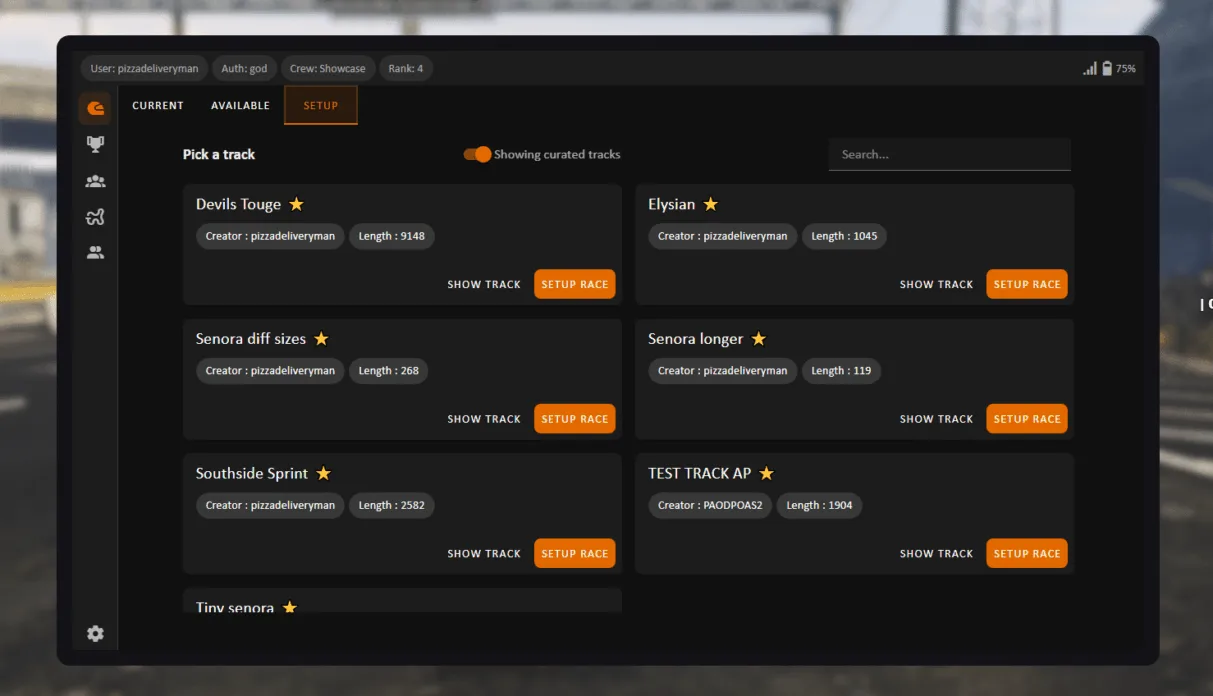
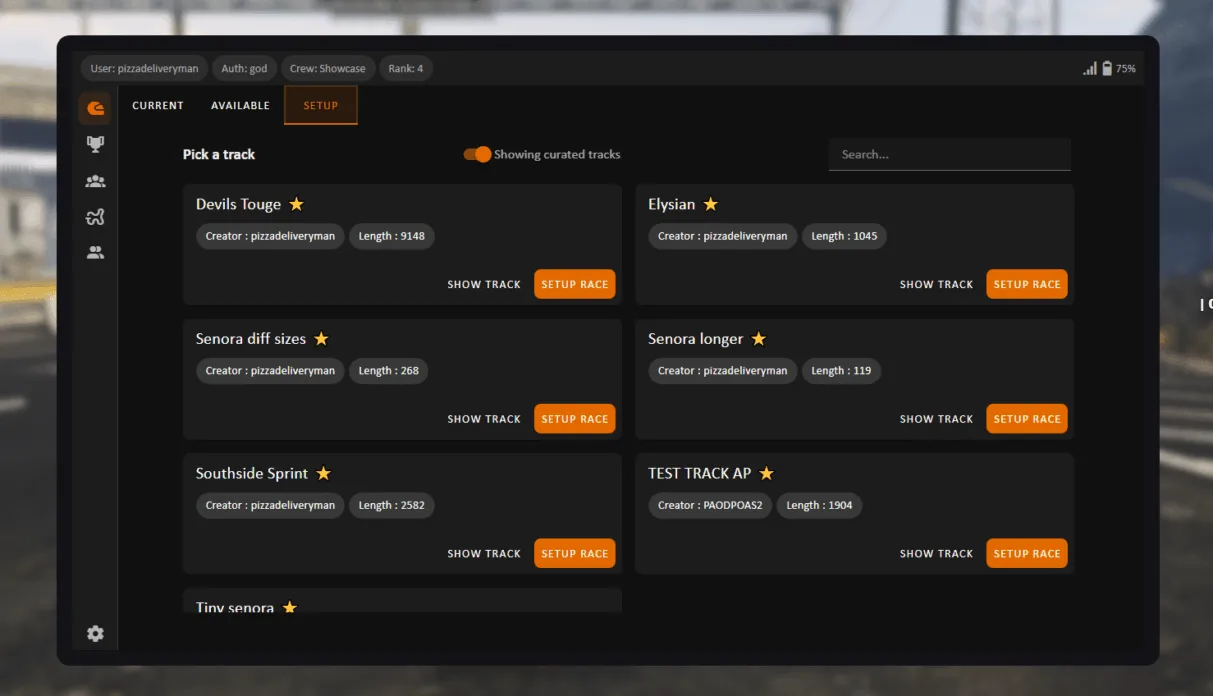
- Race framework: checkpoint creation, brackets, lap timing, leaderboards, wagers. This is your core loop — buy the best one you can afford.
- Advanced tuning: a mechanic/tuning script with real depth (suspension geometry, gear ratios, boost control) turns car setup into its own gameplay and gives mechanic players a profession.
- Drift scoring if drift is your lane — angle/speed-based scoring with multipliers makes practice measurable.
- The supporting cast: persistent vehicle damage, fuel, cosmetic tuning depth, and a phone with a meet-announcement app. The full stack is browsable by category at scripts-tebex.io.
Tracks and venues
You need three kinds of space: a legal venue (a circuit or drift course — several quality track maps exist as streamed assets), street routes (curated point-to-points with risky traffic crossings — document them with maps in Discord like real street crews do), and a social anchor — the parking structure or industrial lot where the community actually lives between races. Dress the anchor properly: props, lighting, a vendor. Meets are 80% standing around talking about cars, and that 80% is your retention.
The identity layer
Racing culture is visual. A custom HUD and speedometer that look like they belong in a racing game, clean timing UI, crew liveries, a loading screen that sets the tone — this layer is what makes clips from your server recognizable on TikTok. xdopestore.com specializes in exactly this finishing layer of HUDs and UI packages.
Events: the heartbeat
One flagship weekly event (Friday night meet, Sunday time attack) plus spontaneous staff-seeded races during the week. Add stakes gradually: buy-ins, a season points system, pink-slip nights for the brave. A racing server with a predictable weekly rhythm retains players through the quiet weekdays because Friday is always coming.
Build the garage first, get one race framework running flawlessly, dress the meet spot, and ship it. The community will tell you — loudly — what they want next.