A fivem racing server is built for players who care about cars first and storylines second. If your community is full of people who would rather chase a clean lap time or win a midnight street race than file police paperwork for an hour, a racing-focused concept gives them a reason to log in. This guide walks through the pieces you actually need to assemble one: race scripts, tracks, an economy that funds the fun, tuning that matters, anti-cheat, and the social glue that keeps people coming back.
Who this concept is for
Heavy roleplay servers ask a lot. New players have to learn rules, fill out character backstories, and stay in character through slow scenes. Plenty of car-culture players find that a chore. They want to drive, compete, and talk shop. A racing server lowers the barrier to entry: show up, grab a car, race. The light structure means you can still grow a real community without forcing anyone through a thirty-minute whitelist application.
That said, “racing first” does not mean “no depth.” The depth comes from progression, rivalries, and a tuning economy rather than from forced narrative.
Core race scripts and what to look for
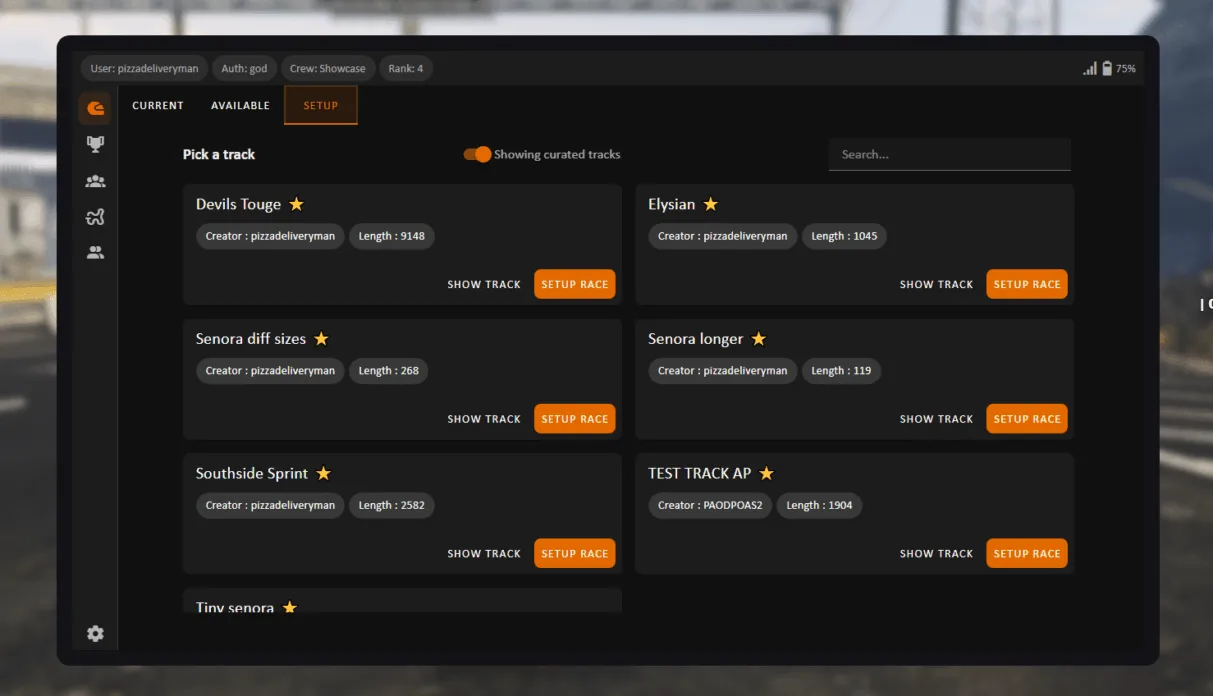
The heart of the server is a solid race script. At minimum you want a race creator that lets you place checkpoints in-game and save tracks without touching code. Look for support for several race formats so the same map can stay fresh:
- Sprint — point-to-point dashes, quick to run and easy for newcomers.
- Circuit — multi-lap loops where consistency beats raw speed.
- Drift — scored on angle and control rather than finishing position.
- Time trial — solo runs against the clock, perfect for ghost leaderboards.
- Pursuit — cat-and-mouse races that lean into light cops-and-racers tension.
Other useful features include grid staggering, false-start handling, class restrictions per event, and a spectator mode so eliminated drivers stay engaged. You can browse race-focused resources at https://scripts-tebex.io to compare creators that bundle these formats together.
Track and checkpoint creation
Good tracks make or break the experience. Most modern race scripts let an admin drive a route, drop checkpoints at each turn, and tag a start and finish line. Keep early tracks short and readable so players learn them fast, then add longer technical routes once your regulars want a challenge.
Think about variety: airport straights for top-speed cars, mountain switchbacks for handling builds, and tight industrial loops for drift events. Dedicated meet and track MLOs add purpose-built spaces that look intentional. You can find drift courses, parking-garage meet spots, and starting-grid props at https://assets-tebex.io to give events a sense of place.
A buy-in and payout economy that stays balanced
Money gives races stakes. The cleanest model is a per-event buy-in that funds the prize pool: everyone pays to enter, winners split the pot. Add optional side betting where spectators back a driver, with the house taking a small cut to act as a money sink.
The risk is inflation. If payouts dwarf the cost of cars and parts, your economy collapses in a week. Tune it so a win covers a meaningful upgrade but not a whole new car. Use sinks — repair costs, entry fees, insurance on totalled vehicles — to keep currency scarce. Cap how much can be bet on a single race so one whale cannot warp the market.
Tuning, upgrades and class balance
Performance tuning is where a racing server earns long-term retention. Engine, brakes, transmission, and turbo upgrades should produce real, felt differences in race outcomes, so players have a reason to grind and experiment. The danger is pay-to-win: if the best parts only come from a cash shop, competitive play dies.
Protect balance with performance classes. Sort vehicles into tiers by tuned stats and run class-restricted events so a fully built car cannot stomp a starter lobby. Keep cosmetic items in any premium offering and keep performance earnable in-game. A well-curated vehicle roster with consistent handling makes class balancing far easier; collections like https://cars-tebex.io are a useful starting point for sourcing cars and tuning parts that fit defined tiers.
Anti-cheat, leaderboards and seasons
Racing invites cheating because the rewards are clear. Validate finish times on the server, not the client. Reject runs with impossible split times, flag teleports between checkpoints, and watch for speed values a car cannot physically hit. Requiring every checkpoint to be passed in order stops corner-cutting and noclip exploits.
Once results are trustworthy, build on them:
- Persistent leaderboards per track and per class.
- Seasons that reset rankings every few weeks so newcomers can climb.
- Rivalry tracking that pairs drivers with similar lap times.
Verified times are also what make ghost laps and rivalry callouts feel earned rather than gamed.
Light RP and community vibe
You can blend in just enough roleplay to add texture without scaring off the casual crowd. Chop shops let players strip and sell cars for quick cash, and a light police-heat system gives pursuit races real consequences without a full justice loop. Keep it optional and fast.
The social glue is car-meet and cruise culture. Scheduled meets, group cruises to a scenic spot, and a photo-friendly garage give non-racers a reason to belong. Promote regular events, spotlight community builds, and let players show off paint and bodywork. That sense of belonging is what turns a server full of strangers into a scene.
A racing server succeeds when the loop is tight: race, earn, tune, race better. Get the scripts, tracks, economy, and anti-cheat right, then let car meets and rivalries do the rest. Start small with a few clean tracks, listen to your regulars, and grow the roster from there.